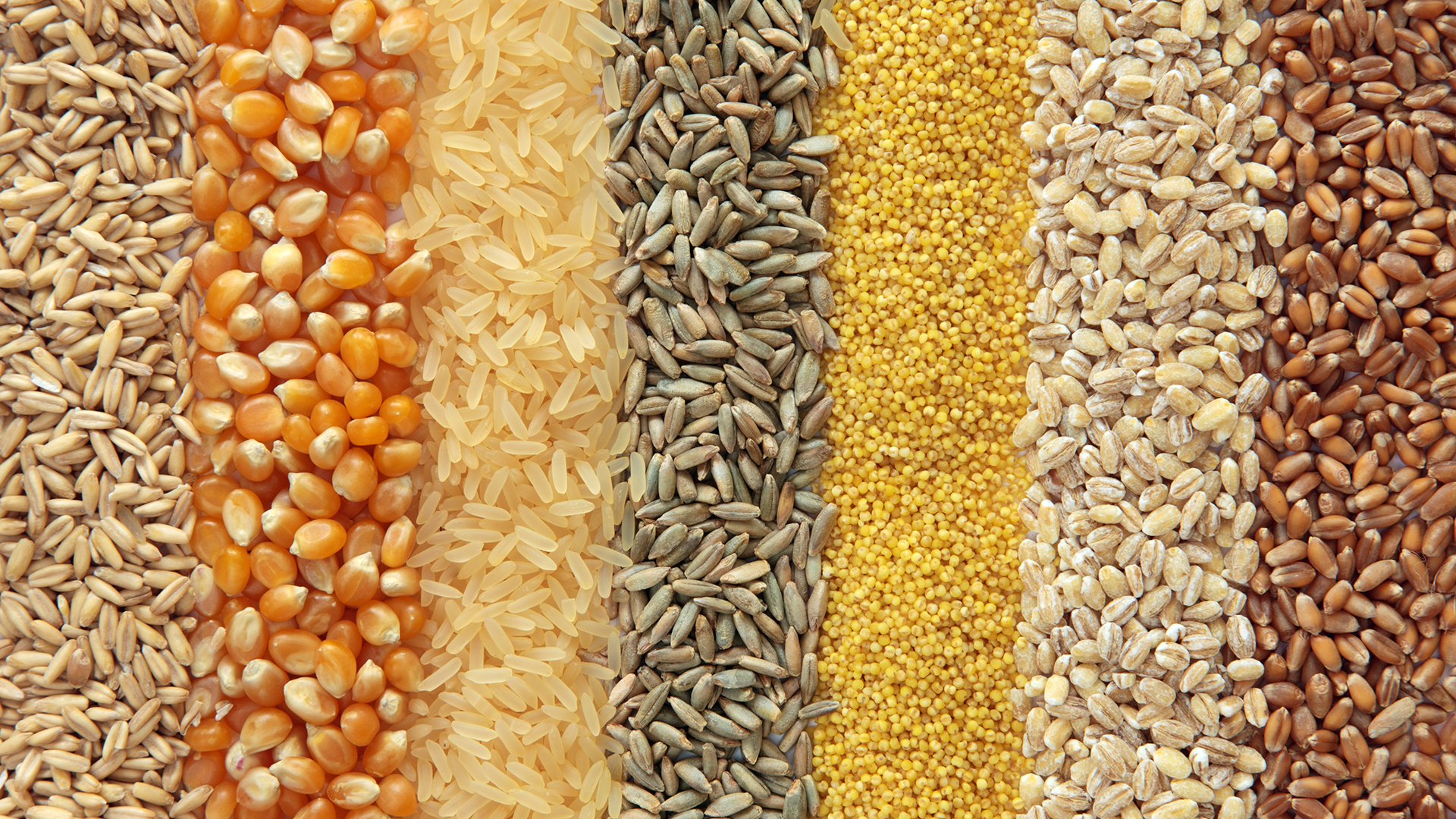
Grains are small, hard, dry fruits collected for consumption by humans or animals. They are classified as dry fruits and are more durable than other primary food products like starchy fruits and tubers. This durability makes grains suitable for industrial agriculture, as they can be mechanically harvested, transported, stored for extended periods, and processed into flour or oil. The global grain market includes major crops such as corn, rice, soybeans, wheat, and others.
Grains and flakes are synonymous with cereal grains, the fruits of grasses. In agronomy and trade, seeds or fruits of other plant families are referred to as grains if they resemble cereal grains. For example, amaranth is sold as “grain amaranth,” and products made from amaranth are described as “whole grain.” Pre-Hispanic Andean civilizations had grain-based dietary systems, but at higher altitudes, none of the grains were grasses. All three grains native to the Andes (quinoa, kiwicha, and canihua) are broadleaf plants, not grasses like corn, rice, and wheat.

Payment for barley from China: How to choose the best method
Here are some options for paying for barley from China in the current environment:
Using alternative payment systems instead of SWIFT, such as CIPS (China International Payment System), UnionPay or other regional systems. This will avoid the fees and restrictions associated with SWIFT.
Settlements in national currencies, such as rubles or yuan, bypassing the US dollar. For this purpose, accounts can be opened in Russian and Chinese banks and mutual payments can be made directly.
The use of cryptocurrencies for international settlements. This will allow you to transfer funds between counterparties quickly and without intermediaries. However, it is worth considering the volatility of cryptocurrencies.
Using the services of foreign trading houses or payment aggregators that can act as intermediaries in settlements. They can accept payments in one country and transfer funds to a partner in another.
Prepayment for deliveries or settlements upon delivery of cargo. This will minimize the risks of non-payment.
As for the HS codes for barley, the most appropriate will be:
1003 – barley
1003900000 – barley other
1103193000 – barley pearl groats
1107109900 – other barley malt
The choice of a specific code depends on the type of barley (grain, groats, malt) and its purpose (food, fodder).
Thus, using alternative payment instruments and correctly classifying the goods according to HS, it is possible to establish smooth settlements for barley supplies from China in the current conditions.
How to Export Grains from China: Conditions, Procedures, and Logistics

Conditions for Export
Before exporting grains from China, it is essential to ensure that the products meet the required standards and regulations. The Chinese government has established strict regulations for the export of grains, including the need for a phytosanitary certificate, which guarantees the product’s quality and safety.
Procedures for Export
The export procedure for grains from China typically involves the following steps:
- Registration: The exporter must register with the Chinese government’s “Cerber” system, which is a database of authorized exporters.
- Phytosanitary Certificate: The exporter must obtain a phytosanitary certificate from the Chinese government, which guarantees the product’s quality and safety.
- Customs Clearance: The exporter must clear customs in China and obtain a customs clearance certificate.
- Transportation: The grains must be transported to the port of departure in China, where they will be loaded onto a ship for export.
Logistics for Export
- Transportation: The grains must be transported from the port of departure in China to the port of arrival in the destination country.
- Storage: The grains must be stored in a secure and dry location to prevent damage or spoilage during transportation.
- Insurance: The exporter must obtain insurance coverage for the grains during transportation to protect against loss or damage.
- Customs Clearance: The exporter must clear customs in the destination country and obtain a customs clearance certificate.
Conclusion
Exporting grains from China requires careful planning, compliance with regulations, and efficient logistics. By understanding the conditions, procedures, and logistics involved in exporting grains from China, exporters can ensure a successful and profitable export operation.